Pete McGuinness left an indelible mark on the neighborhood he loved.
GEOFFREY COBB | gcobb91839@Aol.com
Author, “Greenpoint Brooklyn’s Forgotten Past
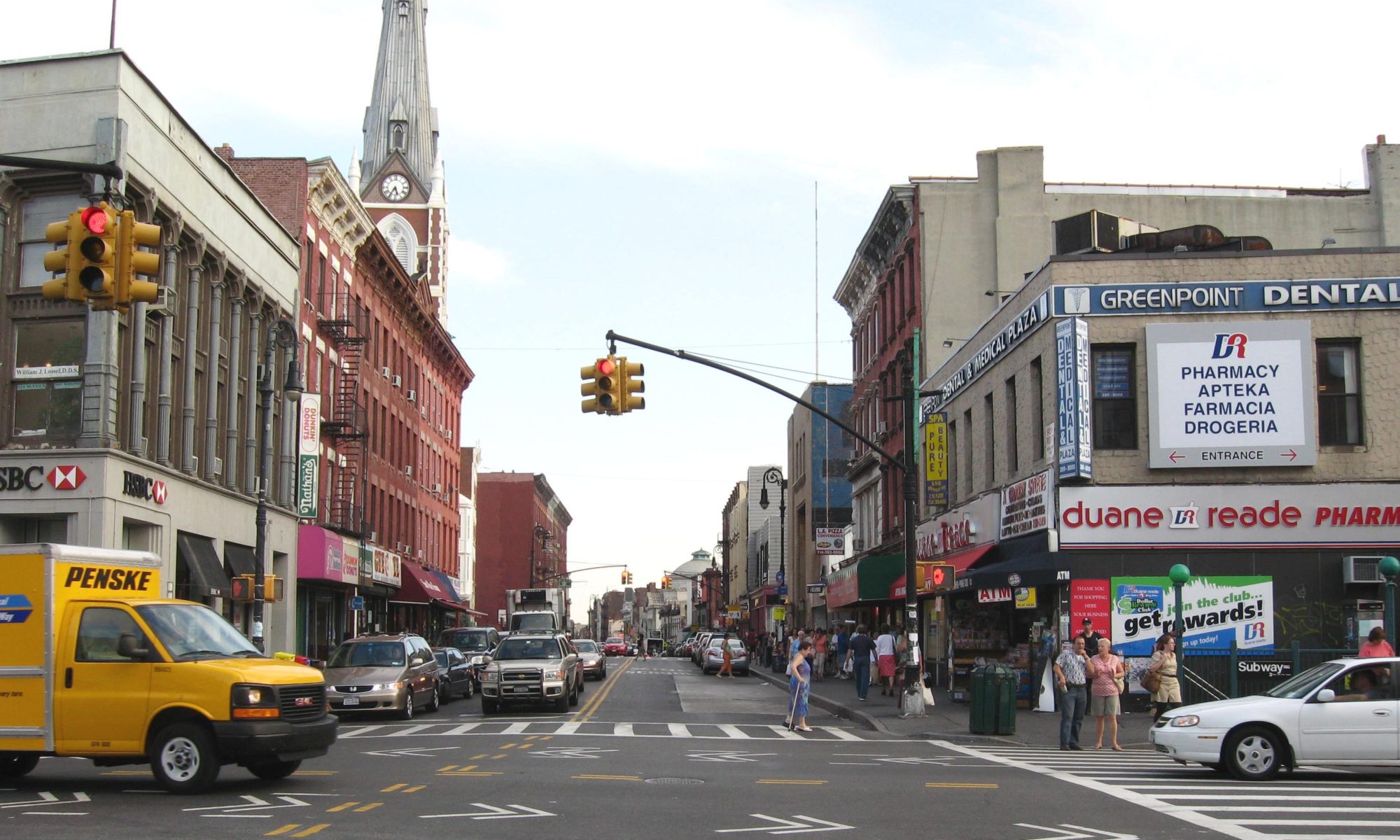
Greenpoint, Brooklyn today is an area of luxury high-rise waterfront properties, pricey, Michelin star restaurants and chic boutiques. Its residents are increasingly Ivy League graduates who live an affluent lifestyle, but not long ago, Greenpoint was the heart of industrial, working-class Brooklyn, an area of blue-collar factory workers and longshoremen, and no one personified working class Greenpoint more than its Irish American political boss Peter J. McGuinness.
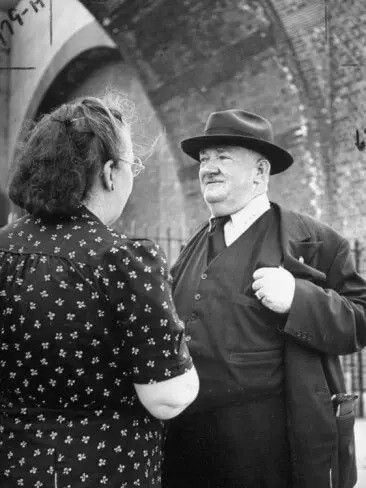
A born and raised Greenpointer and former longshoremen, McGuinness represented Greenpoint on the City Council and then ran the area’s political machine from the end of the First World War until his death in 1948, as the last Tammany Hall style ward boss in the Borough’s history. People often said that McGuinness so embodied Greenpoint that it was hard to think of the one without immediately thinking of the other.
On Wednesday, February 25th, I will speak about McGuinness’ local legacy at the Oak and Iron Bar Local History Night, a forum where locals make presentations on aspects of North Brooklyn history. I have presented at the packed bar before and the atmosphere is great because we Greenpointers are really passionate about our community and its long, rich history.
I have written three books on Greenpoint history including, The King of Greenpoint Peter McGuinness: The Amazing Story of Greenpoint’s Most Colorful Character, which I published ten years ago. Though Greenpoint has over three hundred and fifty years of history, no character was as colorful as McGuinness and arguably no one left a greater legacy than Pete whose enduring contributions include playgrounds, the G Train stops, a bridge and the McCarren Park pool, just to name a few.
McGuinness, like the people he represented, grew up facing adversity and working hard. One of eleven children, Pete left school after eighth grade to work in the area’s lumberyards. An amateur boxer and a longshoreman, McGuinness was a powerhouse standing about six feet tall with a barrel chest, huge back and bulging biceps. Though he was a gentleman, he was well able to settle disputes with his fists. Once when six men tried to force him to accept a shipment of rotten lumber, a fistfight ensued, six-on-one. McGuinness knocked three of his opponents out and then lectured the remaining three on business ethics.
Nowadays, American politics is characterized by divisiveness, name calling and acrimony, but McGuinness, a Democrat, displayed a lifelong ability to work with Socialists and Republicans. He defied the Democratic Party and supported his childhood friend Republican John McCrate when he ran for the area’s congressional seat. When Fiorello LaGuardia defeated the Democratic candidate for mayor, McGuinness graciously stated, “The Little Flower is a most splendid gentleman. Under him, we know the poor people of this city will be looked after, irregardless of what may befall. What he done, he done honest and he done good.”
B. Charney Vladeck, a Socialist alderman from the Lower East Side and an enemy of corrupt Democrats was one of McGuinness warmest admirers. “That Irisher!” Vladeck used to say: “Sometimes he makes me wish I was a Democrat.” McGuinness won Vladeck’s friendship by giving Democratic sponsorship to a number of Socialist resolutions. “Many’s the time,” he said, “I used to say, Cheeny, old pal, if you got something you really want to get through this here board, give it to me, and I’ll make it Irish for you. I figured what the hell, if something was good enough for Cheeny, it was good enough for the other aldermen.”
McGuinness had a legendary sense of humor and there are a number of famous yarns about Pete. One of the funniest relates to Governor Franklin Roosevelt’s 1932 visit to Greenpoint as part of his presidential campaign. McGuinness and the future president were touring the area in an open car, and huge crowds lined the streets to greet them. Roosevelt saw Jewish businesses, Polish children dressed in traditional costumes and Italian Americans, but few Irish Americans. Roosevelt inquired about the absence of the Irish and McGuinness somberly told him that most of the area’s Irish were now dead and buried in Calvary Cemetery. A tense silence ensued and Roosevelt thought he said the wrong thing, but suddenly in a loud voice McGuinness retorted, “But don’t you worry Governor Roosevelt, those dead Irish will still turn out for you on election day.”
Though McGuinness had passed away some thirteen years previously, he was still so beloved that when Oakland Street was widened and made into a boulevard, both local Democrats and Republicans agreed it should be named in honor of its legendary political leader. Come out on Wednesday February 25th to hear more about this local legend.
The other night I met James Nunez, a lifelong Greenpointer of Puerto Rican heritage and we reminisced about the long history of Puerto Ricans in North Brooklyn. Though Puerto Ricans still comprise a vibrant part of our community, many have been forced out of our area, victims to gentrification. James’ grandmother ran a Puerto Rican restaurant in the area until the 1990s. When I first arrived in Greenpoint in the early 1990s, walking north of Greenpoint Avenue meant experiencing Puerto Rico’s exuberant culture. Families sat outside on the street often playing dominoes while listening to salsa music, the smell of pork or chicken being barbecued on a grill wafting through the air.
Many North Brooklyn residents are surprised to learn that Puerto Ricans have lived in our area for over a century. In 1924, Congress passed the first immigration law, severely restricting immigration by establishing national quotas based on the 1890 census, heavily favoring Northern and Western Europeans, and completely barring Asians, particularly Japanese, reflecting widespread nativism and xenophobia. This act dramatically reduced overall immigration, created the first U.S. Border Patrol, and aimed to preserve a perceived homogeneous “American” demographic makeup for decades. In the 1920s, North Brooklyn was the beating heart of industrial New York City, then the planet’s largest industrial city. Local factories, heavily dependent on immigrant Jewish, Polish and Italian labor, facing a manpower shortage, looked to Puerto Rican whose residents were American citizens legally able to work in New York.
One of the local industries hit was the by the labor shortage was the American Hemp Rope Manufacturing Company located on a sprawling campus on West Street. Desperate for workers, the firm sent a ship to Puerto Rico and returned with 130 Puerto Rican women to make rope and shoelaces for the company Other local industries also recruited workers in Puerto Rico including Domino Sugar, which once ran the world’s largest sugar refinery in Williamsburg.
Puerto Ricans who spoke Spanish as a first language encountered many problems, including racism, discrimination and language issues because local schools for many years had no programs for immigrant children to learn English as a second language. Puerto Rican children suffered a very high dropout rate in schools. In 1961, Puerto Rican woman Antonia Pantoja founded ASPIRA (Spanish for “aspire”), a non-profit organization that promoted educational reform to help struggling Hispanic students. In 1972, ASPIRA of New York, filed a federal civil rights lawsuit demanding that New York City provide classroom instruction for struggling Latino students and bilingual and English as a Second Language instruction was born helping Hispanic students learn English and stay in school.
By the 1950s, North Brooklyn had become home to thousands of Puerto Rican migrants. Many white residents left Brooklyn in the 1960s for the suburbs and Puerto Ricans quickly replaced them. The North end of Greenpoint became predominately Puerto Rican and the south side of Williamsburg also grew into a huge Puerto Rican quarter.
By the late 1960s, Puerto Ricans comprised about a third of the local population. Many Puerto Ricans bought houses left by locals fleeing the area for the suburbs and a generation of Puerto Rican Greenpointers came of age locally. Although some Puerto Ricans owned their own homes most were renters who were forced out by rising housing prices.
Puerto Ricans soon organized to fight gentrification. In 1972, Puerto Ricans and other Hispanics in the south side of Williamsburg helped organize Los Sures, a community organization that still exists, which fights to help working-class people secure their housing rights. Los Sures was also perhaps the first North Brooklyn organization to provide a number of vital community services including education, senior citizen services and even a food pantry. Los Sures began responding to problems that confront tenants today, including withdrawal of city services, lease violations and illegal evictions. The organization also fought property owners trying to vacate their buildings to gentrify and whiten the neighborhood. Los Sures promoted community-based control of housing, both through management and ownership. In 1975, Los Sures became Brooklyn’s first community-based organization to enter into agreements to manage City-owned properties. It also became one of the first tenant advocacy groups to undertake large-scale rehabilitation. Still fighting for local people, Los Sures is a vital force in community activism.
Though the Puerto Rican presence in North Brooklyn is far smaller than it once was, many Puerto Ricans still and work in our area. Many Puerto Rican Greenpointers run local businesses including lifelong resident Catherine Vera Milligan who runs a wonderful coffee shop at 269 Nassau Avenue. If you want to eat delicious authentic Puerto Rican food try Guarapo restaurant on 58 North 3rd Street, Chrome at 525 Grand Street or La Isla at 293 Broadway. These places prove that Puerto Rican culture is still a vital part of the gorgeous mosaic of cultures that make up North Brooklyn. The other night I met James Nunez, a lifelong Greenpointer of Puerto Rican heritage and we reminisced about the long history of Puerto Ricans in North Brooklyn. Though Puerto Ricans still comprise a vibrant part of our community, many have been forced out of our area, victims to gentrification. James’ grandmother ran a Puerto Rican restaurant in the area until the 1990s. When I first arrived in Greenpoint in the early 1990s, walking north of Greenpoint Avenue meant experiencing Puerto Rico’s exuberant culture. Families sat outside on the street often playing dominoes while listening to salsa music, the smell of pork or chicken being barbecued on a grill wafting through the air.
Many North Brooklyn residents are surprised to learn that Puerto Ricans have lived in our area for over a century. In 1924, Congress passed the first immigration law, severely restricting immigration by establishing national quotas based on the 1890 census, heavily favoring Northern and Western Europeans, and completely barring Asians, particularly Japanese, reflecting widespread nativism and xenophobia. This act dramatically reduced overall immigration, created the first U.S. Border Patrol, and aimed to preserve a perceived homogeneous “American” demographic makeup for decades. In the 1920s, North Brooklyn was the beating heart of industrial New York City, then the planet’s largest industrial city. Local factories, heavily dependent on immigrant Jewish, Polish and Italian labor, facing a manpower shortage, looked to Puerto Rican whose residents were American citizens legally able to work in New York.
One of the local industries hit was the by the labor shortage was the American Hemp Rope Manufacturing Company located on a sprawling campus on West Street. Desperate for workers, the firm sent a ship to Puerto Rico and returned with 130 Puerto Rican women to make rope and shoelaces for the company Other local industries also recruited workers in Puerto Rico including Domino Sugar, which once ran the world’s largest sugar refinery in Williamsburg.
Puerto Ricans who spoke Spanish as a first language encountered many problems, including racism, discrimination and language issues because local schools for many years had no programs for immigrant children to learn English as a second language. Puerto Rican children suffered a very high dropout rate in schools. In 1961, Puerto Rican woman Antonia Pantoja founded ASPIRA (Spanish for “aspire”), a non-profit organization that promoted educational reform to help struggling Hispanic students. In 1972, ASPIRA of New York, filed a federal civil rights lawsuit demanding that New York City provide classroom instruction for struggling Latino students and bilingual and English as a Second Language instruction was born helping Hispanic students learn English and stay in school.
By the 1950s, North Brooklyn had become home to thousands of Puerto Rican migrants. Many white residents left Brooklyn in the 1960s for the suburbs and Puerto Ricans quickly replaced them. The North end of Greenpoint became predominately Puerto Rican and the south side of Williamsburg also grew into a huge Puerto Rican quarter.
By the late 1960s, Puerto Ricans comprised about a third of the local population. Many Puerto Ricans bought houses left by locals fleeing the area for the suburbs and a generation of Puerto Rican Greenpointers came of age locally. Although some Puerto Ricans owned their own homes most were renters who were forced out by rising housing prices.
Puerto Ricans soon organized to fight gentrification. In 1972, Puerto Ricans and other Hispanics in the south side of Williamsburg helped organize Los Sures, a community organization that still exists, which fights to help working-class people secure their housing rights. Los Sures was also perhaps the first North Brooklyn organization to provide a number of vital community services including education, senior citizen services and even a food pantry. Los Sures began responding to problems that confront tenants today, including withdrawal of city services, lease violations and illegal evictions. The organization also fought property owners trying to vacate their buildings to gentrify and whiten the neighborhood. Los Sures promoted community-based control of housing, both through management and ownership. In 1975, Los Sures became Brooklyn’s first community-based organization to enter into agreements to manage City-owned properties. It also became one of the first tenant advocacy groups to undertake large-scale rehabilitation. Still fighting for local people, Los Sures is a vital force in community activism.
Though the Puerto Rican presence in North Brooklyn is far smaller than it once was, many Puerto Ricans still and work in our area. Many Puerto Rican Greenpointers run local businesses including lifelong resident Catherine Vera Milligan who runs a wonderful coffee shop at 269 Nassau Avenue. If you want to eat delicious authentic Puerto Rican food try Guarapo restaurant on 58 North 3rd Street, Chrome at 525 Grand Street or La Isla at 293 Broadway. These places prove that Puerto Rican culture is still a vital part of the gorgeous mosaic of cultures that make up North Brooklyn.
One of the first things that our new Mayor Zohran Mamdani did was to come to Greenpoint and address the controversy surrounding McGuinness Boulevard, the four- lane traffic artery that divides the neighborhood and many local resi- dents. Before we address the present controversy let’s take a look at the history of the boulevard. Once, Mc- Guinness Boulevard was not a four- lane speedway at all/ It was once quaint Oakland Street; a charming cobblestoned street lined by pretty, wood-frame 19th-century homes typical of our historic district.
It is hard to conceive the mindset that wanted to destroy such a lovely street and replace it with a soulless four-lane highway, but in the late 1950s automobiles were seen as the future of transportation and the city was ready to carve up Greenpoint for motorists. Robert Moses, the in- famous power broker, had his sights on our area. Moses, who arguably had the greatest influence on New York’s infrastructure of any person who ever lived, wanted to destroy Oakland Street. The destruction of Oakland Street was only a small piece in the grand scheme of Rob- ert Moses who built the BQE, the Tri-borough Bridge, and the Cross-
Bronx Expressway. Moses wanted a city for motorists and tens of thou- sands of homes across the city fell victim to his projects.
Oakland Street was, sadly, the only north-south street, other than Manhattan Ave. that stretched to Newtown Creek. In the late 1950s the city determined that the rick- ety old Vernon Blvd. Bridge, which Greenpointers called the Manhattan Avenue Bridge, should be replaced. The north end of Oakland Street be- came the logical place to build a new bridge of the creek, and they built the Pulaski Bridge to funnel traffic between the Brooklyn Queens Ex- pressway in Brooklyn and Long Is- land City.
When the new bridge first opened, Oakland Street was widened, but only as far south as Greenpoint Ave- nue – and gas stations to service the heavy car and truck traffic quickly appeared. The narrow section of Oakland Street remaining beyond Greenpoint Avenue survived, but created traffic jams, dooming the quaint cobblestone street and its pretty houses.
All of the houses on the east side of Oakland Street and all the houses from Driggs Ave to the BQE were condemned by the City to create the new grand boulevard. Some residents tried to fight and save their homes, but their utilities were cut off, and they grudgingly accepted com- pensation for their beloved homes. Amazingly though, most people did not protest. They regarded losing their homes and the cobblestoned street as the price to pay for progress. The only defiance by the community was a proposal for more gas stations on the boulevard south of Meserole Av- enue. The commu- nity killed the idea and that is the only reason new hous- ing was built on the thoroughfare at all.
In 1964, Sal- vatore Tortorici pressed his local alderman, Joe Shar- key to rename the new boulevard in honor of the great- est politician in lo- cal history: Peter J. McGuiness, who had passed away in 1948. The City Council passed the name change unani- mously and Oak- land Street was re- named McGuinness Boulevard.
Many local residents have complained about the way motorists drive along the boulevard. The four wide lanes encouraged aggressive driving, illegal passing, and excessive speeding—conditions that routinely lead to serious motor vehicle collisions. Hundreds of pedestrians have been hit on McGuinness Boulevard, with over 200 fatalities since 1956, including 11 pedestrians or cyclists killed between 1995 and 2021.
Activists in the community pushed for the transformation of McGuinness into a two-lane, pedestrian friendly artery with bike lanes. Wealthy production company own- ers Gina and Tony Argento funded a movement to block the changes to the boulevard. After the redesign began in 2023, the Adams admin- istration abruptly switched course, throwing its support behind a re- vised plan for the northern section of the road that critics called wa- tered down and insufficient.
In August, the Manhattan district attorney charged Ingrid Lewis-Mar- tin, a top aide to Mr. Adams, with conspiring to kill the original pro- posal, in exchange for a relatively small sum of money and a speaking role on a television series owned by the Argento siblings. Ms. Lewis-Martin pleaded not guilty, as did the production company’s owners, Gina and Anthony Argento, who were also charged.
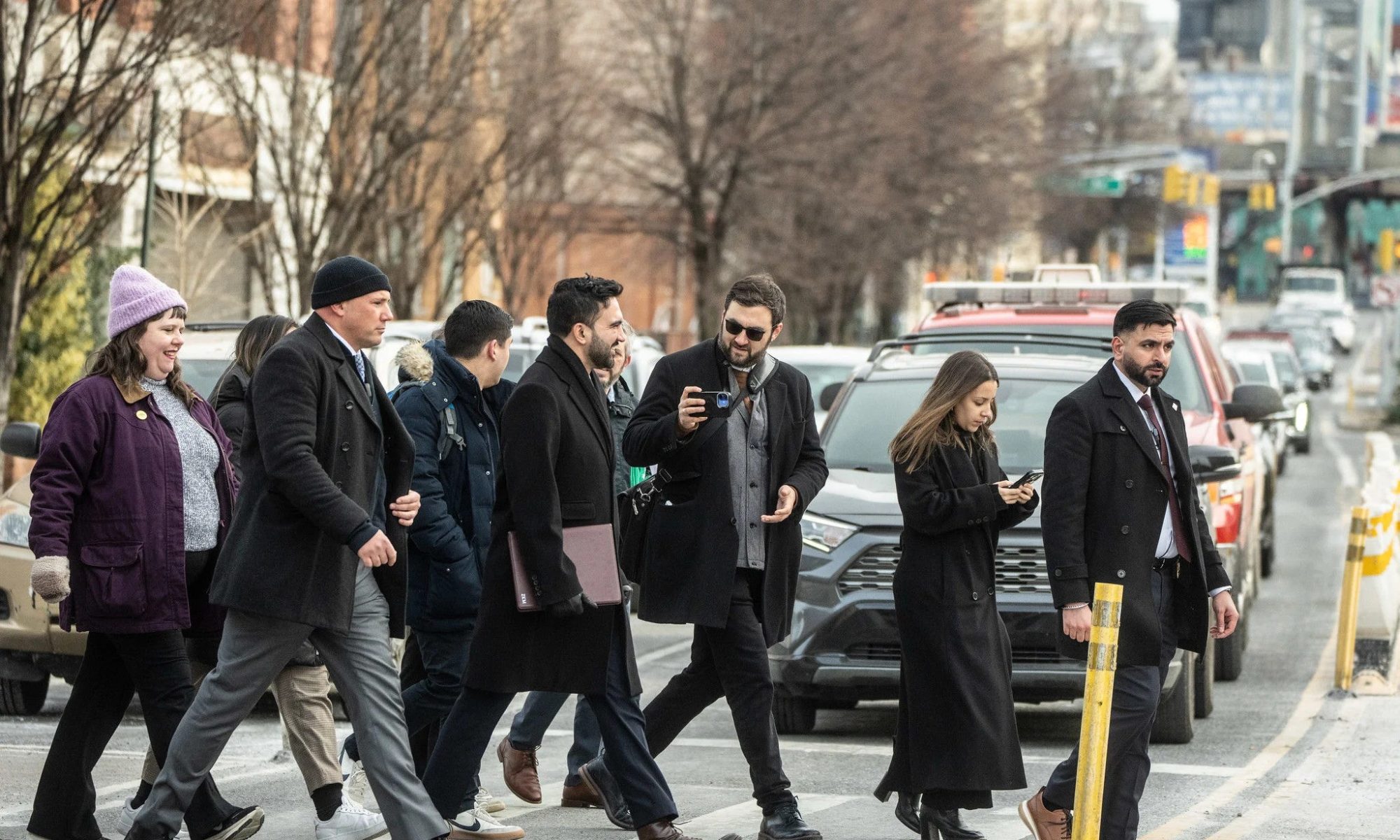
Last week, Mayor Mamdani, surrounded by supporters with signs bearing the names of crash victims on the boulevard, said he would finish the original, full plan for the roadway as soon as weather permit- ted, and that he would not be “bowed by big-money interests.” “Thanks to so many who went out and pounded the pavement, that pavement now will change,” he said. Some residents fear that the changes to the boulevard will lead to increased auto traffic on the streets running parallel to the boulevard. One thing though is certain, the boulevard will soon change into a narrower, more pedes- trian and cyclist friendly artery.
A few years ago, I was driving towards the BQE on a cold blustery early January day, not unlike the recent cold snap we have been having, when I was shocked to see a camel at the intersection of Graham Avenue and Meeker Avenues. Much to my delight, I realized that the camel was part of an old Hispanic tradition that is still celebrated in our area, the Feast of the Three Kings, a beautiful part of Puerto Rican and Latinx heritage that will be on display this week.
The Feast of the Three kings has its roots in Spanish and Latin American Catholic culture. The feast is a celebration of the Epiphany, the day the Three Kings, or Three Wise Men, Caspar, Melchior, and Balthazar, reached Bethlehem, after a 12-day journey guided by a star, to where baby Jesus lay. The Kings, who arrived by camel, brought gold, frankincense, myrrh, and annotated oil to Jesus. According to Hispanic tradition, on the Epiphany before going to sleep, children leave grass or hay under their beds, or in their shoes, for the camels that carry the Three Kings on their travels to deliver gifts to children around the world. In the morning, children find gifts in place of the hay and families have a big celebration. Inspired by the Magi who brought gifts of gold, frankincense and myrrh to the Infant, in many Hispanic cultures families also celebrate the day with an exchange of gifts. Another tradition is the eating of a Roscon de Reyes (King’s Ring). This sweet bread shaped like a wreath has a figurine of a baby Jesus baked inside. Customarily, the person who finds the figurine is expected to host a party on Día de la Candelaria (Candlemas), celebrated on February 2nd.
Three Kings Day is widely celebrated in Spain and across much of Latin America, including Mexico, Puerto Rico, the Dominican Republic, Cuba, Colombia, and parts of Central and South America. There are celebrations across New York City in areas where Puerto Rican and other Latino immigrants have settled including East Harlem, The Lower East Side and Williamsburg/Greenpoint. In Puerto Rico towns across the island, from San Juan to Ponce, hold vibrant celebrations every January 6 th . For many in the Latinx and Caribbean communities, this day represents faith, unity, and cultural resilience. It is a living and vital link for New York Hispanics to the culture and faith of their roots and one that they are fighting to keep alive.
Saturday January 10 th the Southside Williamsburg Hispanic community organization El Puente will hold its thirty-ninth annual Feast of the Three Kings celebration from 10- 6 at 211 South 4th St., Williamsburg with a parade. When the first feast day was celebrated almost forty years ago, there was a huge Hispanic presence in the area, but as a result of gentrification the Hispanic population, which comprised fifty percent of residents in 2010 is now down under 20%, but organizers of the festivities are determined to keep the tradition going. Parade founder and president, Radames Millan, says that the event was begun so that young Hispanics are aware of and continue to preserve the culture of their parents and ancestors. The parade often includes colorful floats, dancers in colorful Mexican costumes, a stilt walker waving the Puerto Rican flag, local merchants advertising their wares and of course vibrant Hispanic music. A Padrino, which literally means Godfather is chosen from the community as a special honoree of the parade. Two Madrinas, or Godmothers are also honored in the parade.
El Puente’s celebration features singing, dancing, acting by local elementary to high school students, highlighting their roles as future leaders. The tradition also blends culture with advocacy, focusing on important community themes like peace, justice, self-determination, and environmental sustainability, the same themes that inspired El Puente’s legendary late founder Jose Garden Acosta to found this community service organization.
Each year El Puente chooses a theme for the feast. Last year the theme was Planting a seed, honoring children as future leaders and focusing on nurturing their potential for peace and justice. For El Puente the celebration is also a means for local Hispanics to affirm their identity and culture, while maintaining their unique traditions, even in a new setting.
Another celebration of the Feast of the Three Kings will take place Tuesday January 6 th at the Moore Street market 110 Moore St., Williamsburg and the free celebration will include hot chocolate, gifts, and arts & crafts. Even if you are not Hispanic, the Feast of the Three Kings celebration is lively festive and rhythmic offering a fun way to learn about the rich Hispanic heritage of North Brooklyn. Come out and enjoy the fun.
Right after Thanksgiving in Greenpoint and Williamsburg every year, the sidewalks are suddenly transformed. Hundreds of cut Christmas trees magically appear, just like mushrooms in a forest after a heavy rain. Though the trees are plentiful, they are not cheap. Tiny trees will run you $50, while a premium tree can cost up to $300! Even though the prices are high, we always buy a tree and drag it home. Decorating the tree brings back happy memories of childhood long ago and the scent that fills the house is heavenly. Please don’t remind me about the pain of cleaning the ubiquitous needles and dragging the tree out of the house at the end of the holiday!
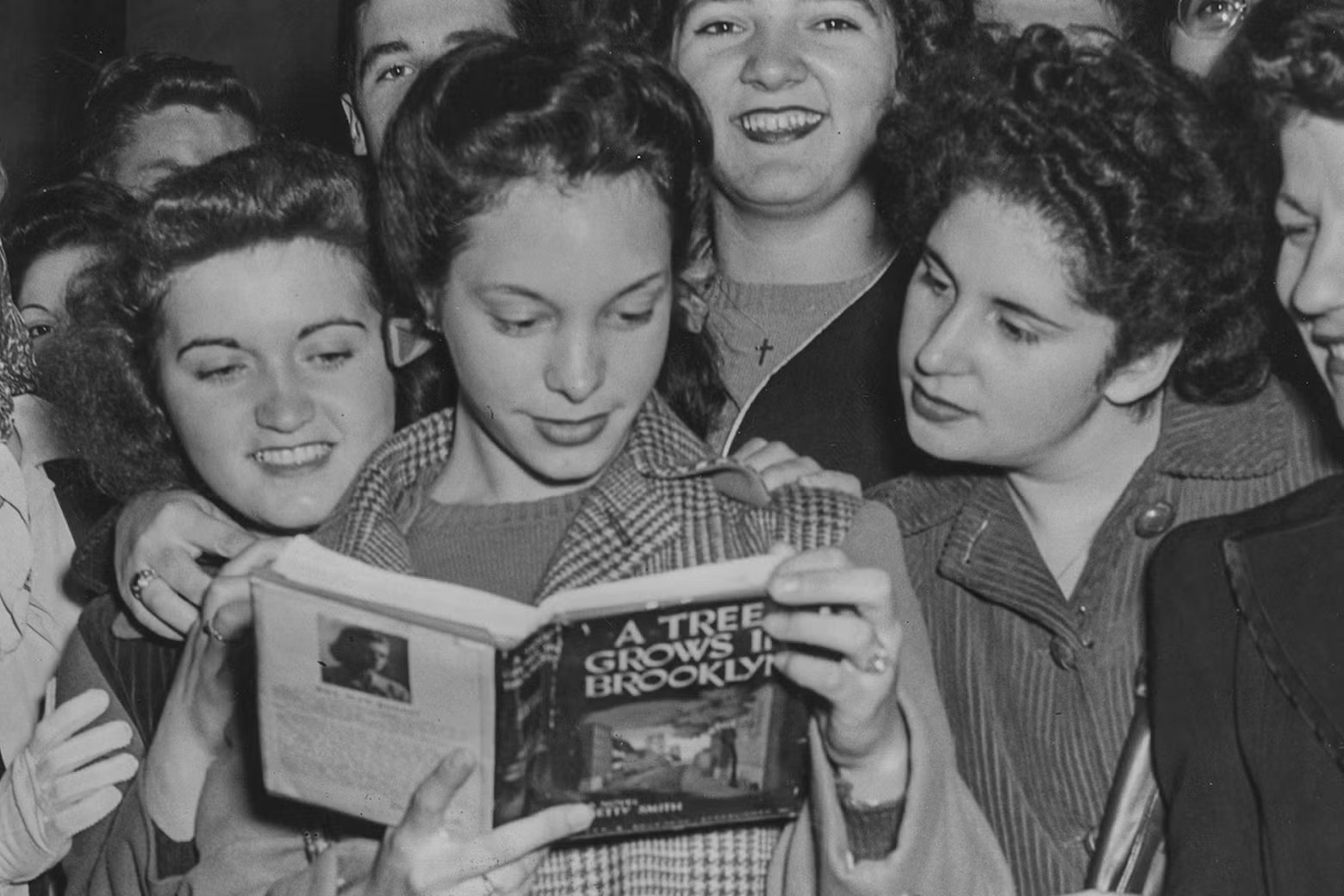
Seeing the trees for sale waiting on snowy local sidewalks reminds me of one of the most touching chapters in the best book ever written about Brooklyn, the 1943 classic, A Tree Grows in Brooklyn. The novel is a coming-of-age story of a young local girl, Francie Nolan who grows up in the poverty of Williamsburg tenements in 1912. The novel was a huge success, and it transformed its author Betty Smith into a famous author overnight. Twentieth Century Fox acquired the rights to the book and two years later it became a box office hit that won a special Oscar award.
Smith’s chapter about Christmas in our area long ago is one of the most poignant. Francie, the protagonist and narrator, paints a vivid picture of how the struggling local population experienced Christmas long ago. Christmas trees, sadly, were a luxury many could not afford. Ten-year-old Francie excitedly tells her readers, “Christmas was a charmed time in Brooklyn.” Though they were a charmed time for local children, they were also times of great cruelty as one local ritual the narrator vividly describes proves.
Over a century ago, local sidewalks were also transformed by a salesman hawking Christmas trees. Smith tells us that spruce trees began coming into the neighborhood a week before Christmas. She relates in her novel, “There was a cruel custom in the neighborhood. It was about the trees still unsold at midnight of Christmas eve. There was a saying that if you waited until then you wouldn’t have to buy a tree, that they’d chuck ’em at you.” This was literally true.
The kids in the area gathered where there were unsold trees. The man threw each tree in turn, starting with the biggest. Kids volunteered to stand up against the biggest. If a boy did not fall under the impact of the tree, it was his.
The impoverished protagonist, Francie, age ten, and her brother Neely, age nine, volunteered to catch a tree, the biggest in the neighborhood at ten feet. The tree was so large and so expensive that it remained unsold in this area of poor people. Tiny Francie and her brother stepped up to catch the huge tree, much to the delight of the snickering residents who had gathered to watch and enjoy the cruel spectacle. The tree seller admired the bravery of the little duo and thought about just giving them the tree, but rationalized that if he gave them the tree, it would encourage people the following year to wait until midnight and not buy the trees, hurting his business. The tree salesman finally hurled the ten-foot spruce at the tiny pair and though their legs quivered, they did not buckle under the weight of the tree, and it was theirs, though being hit with the heavy spruce had left them both bruised and bloodied.
The tree salesman finished the cruel ritual by telling the battered kids,” And now get the hell out of here with your tree you lousy bastards.”
The children then eagerly dragged the large tree back to their apartment to decorate it. The readers share in the Christmas joy of the poor children who have paid such a steep price for this symbol of Christmas. The scene re-enforces the theme of the book that poverty was hard in Williamsburg, but it made the kids who suffered through it even harder.
Thankfully, over a century later our area is far richer. Thousands of locals can afford even high-priced trees, and no child is reduced to the bloody spectacle of catching an unsold Christmas tree, a fact that we can all celebrate this Christmas season.
Greenpointers trace a beloved enclave’s colorful past and uncertain future.
By COLE SINANIAN
news@queensledger.com
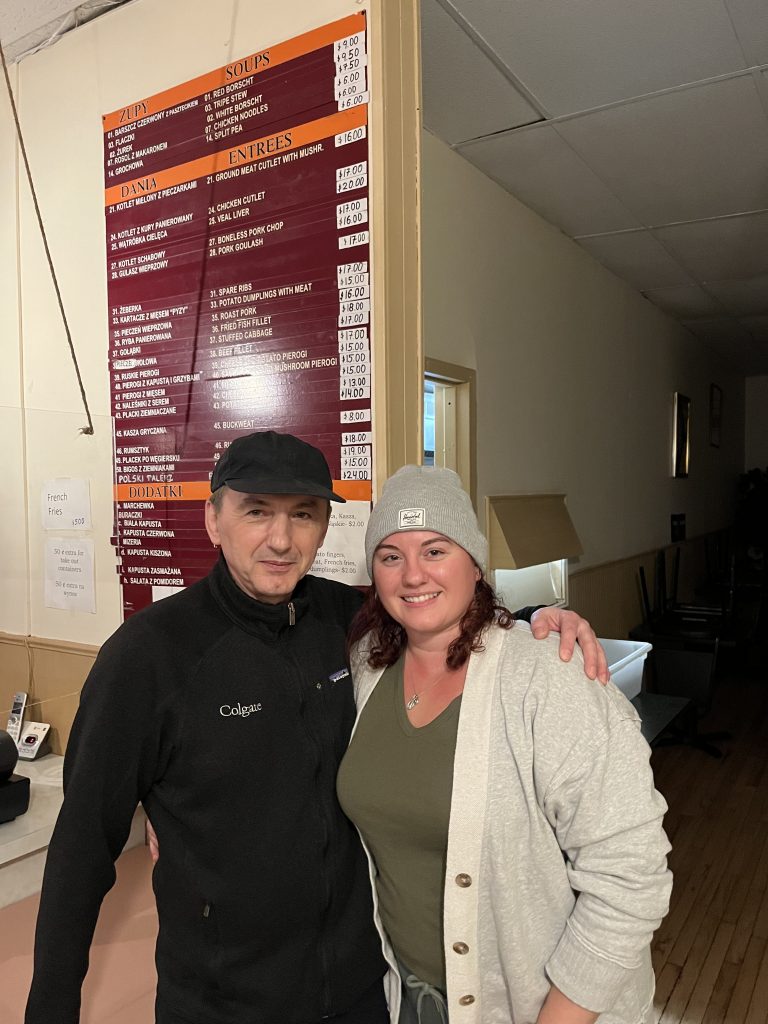
Izabella Prusaczyk remembers the Pulaski Day parade of her youth. Everyone was out on the street in Greenpoint speaking Polish, the red and white of the Polish flag painting their faces and hanging from the cars that did donuts in gas station parking lots. Poles would crowd the delis, subway cars and street corners on Greenpoint, Nassau and Manhattan Avenues, out to show pride for their homeland in what was then America’s preeminent Polish enclave. When her father, Marek, arrived from Poland in the early 1990s, he spoke no English, but had no trouble finding his way in Greenpoint, where he now operates a restaurant called Pyza, named for its specialty in pyzy, a kind of Polish dumpling.
“It really felt like the city was ours,” Prusaczyk said.
Polish-American NYU student Sebastian Staskiewicz was born in Greenpoint and spent his early childhood on Diamond Street. The Polish community here back then was tight-knit. He recalls grocery shopping with his Polish grandma, who spoke no English but had no trouble communicating with her neighbors and shopkeepers in the majority Polish-speaking community. Polish flags hung from storefronts and almost every corner was a Polish-owned bakery, deli or butcher shop.
“It was a very friendly community,” he said. “She would push me on a stroller and every block or so we had some sort of friend or relative that we could wave ‘hi’ to at the local deli. For her it was much easier in that sense because she could still use Polish to navigate and live within the US.”
Alain Beugoms, current principal of PS 34 on Norman Ave, was just beginning his teaching career in 2002, and remembers the Greenpoint of this era as one of New York’s most vibrant ethnic enclaves.
“It was almost like a Chinatown kind of experience,” he said. “Many people on the street speaking Polish, many stores and little restaurants and little shops, bookstores in Polish, all serving the Polish community.”
In 2025, Greenpoint’s Polish heritage is not so easy to spot. Nowadays, English is more commonly heard than Polish, and many Polish businesses have disappeared, replaced by American chains, cafes and now, cannabis dispensaries. Beloved Polish butcher shops and specialty supermarkets peddling smokey kielbasa, blood sausages and other Polish delicacies have closed their doors as corporate supermarket chains have moved in. Meanwhile, an influx of wealthy professionals who began moving to Williamsburg in the 2000s has spilled over into Greenpoint, while higher housing costs and luxury residential towers have followed, forever altering the neighborhood’s once working-class, predominantly immigrant character.
“I always saw someone I knew at the store I’d go to to get deli meats,” Prusaczyk said. “Now it’s a weed dispensary. We’re really on the decline here.”
“Everything is so expensive now,” continued Prusaczyk, who works with her father and her mother, Grazyna, at Pyza. “People get mad at us for our prices being so high, but I’m like, do you know where you are? There’s avocado toast for $18 down the block.”
But although many members of Greenpoint’s original Polish community have left — often moving either to the suburbs or back to Poland, where economic conditions have improved drastically since the fall of the Soviet Union — others stayed to raise families with children now growing up as Polish Americans, whose presence continues to influence neighborhood life through their cuisine, customs, and language.
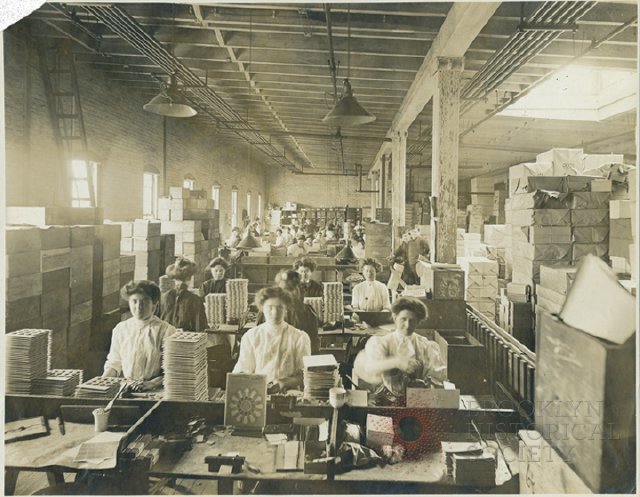
A view inside the Eberhard Faber pencil factory on Kent Street in 1915, after the first peak of Polish migration to Brooklyn in the 1890s. Courtesy of the Brooklyn Historical Society.
Poles in America
Polish immigration to America reached its peak in the 1890s. By the 1920s, more than 2 million Poles had immigrated to the US, according to the Library of Congress. Many of these early arrivals were economic migrants and political refugees, working as steelworkers, miners, meatpackers and autoworkers and congregating in enclaves in America’s industrial centers.
Later, a subsequent wave of Polish immigrants arrived after the fall of the Soviet Union in the 1980s and 1990s. A New York Times report from 1984 counted 50,000 people of Polish descent living in Greenpoint. These were economic migrants as well, mostly younger, educated people who took low-paying, working class jobs with intentions of saving money and eventually returning to their country once conditions there improved.
“Our 80s in Poland in the 20th century were truly devastating,” said Mateusz Sakowicz, the Polish Consul General in New York. “There were no products on the shelves and you could barely make ends meet. People had to line up to buy diapers.”
According to Sakowicz, Greenpoint’s “Little Poland” era peaked in the early-mid 2000s. In addition to gentrification and rising housing costs, Sakowicz partially attributes Little Poland’s decline to Poland’s 2004 entry into the European Union, which brought the country unprecedented economic growth and facilitated easy immigration to other European nations. Since 2004, Polish immigration to the US has slowed to a trickle.
“Finally my country has much more to offer, and it’s actually a preferable place to be, in particular if you’re of Polish origin,” Sakowicz said. “And if they were deciding to emigrate, people were choosing different states, closer to home,” he continued.
Partly as a result of Poland’s economic growth — with the country’s GDP having grown by 300% between 1989 and 2024, according to a report from Wrocław University in Poland — more people of Polish origin are returning to Poland than are leaving the country.
Meanwhile, many of the Polish economic migrants to Greenpoint of the 1980s have since moved on, having kids in Greenpoint, then purchasing homes outside the city. This is precisely what Staskiewicz’ family did, moving to Linden, New Jersey while Staskiewicz was in elementary school. Other family members moved to Long Island and Pennsylvania, Staskiewicz said, chasing better affordability and a higher quality of life to raise their families. Many of Prusaczyk’s childhood friends moved to Masbeth, Middle Village, or further out on Long Island.
Izabella Prusaczyk and her father, Marek Prusaczyk. Marek came to Greenpoint from a small town in the north of Poland in the early 90s. He opened Pyza, a Greenpoint staple serving traditional Polish food, in 1993.
Little Poland lives on
Like much of Central and Eastern Europe, Poland is a deeply Catholic country. St. Stanislaus Kostka Church on Humboldt Street, founded in 1896, remains a community hub. Staskiewicz attended Sunday mass here with his family as a kid, while Prusaczyk, now in her 30s, regularly goes to mass conducted in Polish by Pastor Grzegorz Markulak. On December 7 at 5:30pm, the church will host a screening of Triumph of the Heart, a Polish language film that tells the story of Maximilian Kolbe, a priest who was killed at the Auschwitz concentration camp.
Given Poland’s deep Catholicism, it should be unsurprising that Greenpoint’s Polish community is most visible around Christmas and Easter.
In Polish culture, Christmas is traditionally celebrated on December 24, not December 25. And the Christmas Eve meal contains no meat. The holidays are a busy time at Pyza, Prusaczyk says, with Polish and Polish Americans coming from all over the tri-state area to pick up their special orders. Many are loyal customers who’ve since moved out of Greenpoint, usually to Masbeth or further out on Long Island. One Polish woman named Eva was once a Pyza regular but now lives in Connecticut. Still, she comes without fail every Christmas Eve to order Polish Christmas specialties like krokiety (croquettes), saurkraut, kapusta (cabbage) and mountains of pierogies. Some years, Pyza sells more than 3,000 pierogies over Christmas.
On Easter, baskets are packed with food and gifts, and local Poles line up outside St. Stanislaus’s to have them blessed by a priest, part of a tradition called Święconka that dates back to the 7th century. This confuses many tourists and non-Polish Greenpoint residents, Izabella says, who raise their eyebrows at the long line of people carrying their baskets outside the church.
For Sakowicz, the Polish General Consul, it is the long queues that form around the holidays outside bakeries like Syrena, Cafe Riviera, and others serving Polish bread and pastries, that most remind him of Poland.
“Maybe they expect communism a little bit,” he said. “Because in communism, there was scarcity of products and oftentimes they’d have to line up for a day and a half.”
Sakowicz, who’s lived in America since 2011, currently resides on the Upper West Side, although he commutes to Greenpoint regularly to get his haircut at his favorite Polish salon. During the warmer months, he says you’re most likely to hear Polish spoken in Greenpoint during the evening, as the sun is setting over the Manhattan skyline and most people are doing their shopping.
“You have many Poles that would leave Greenpoint, but still go there every now and then to do a routine,” Sakowicz says. “You have your favorite hairdresser, you want to go and gossip.”
New Opportunities
Back in the 1980s and 1990s, many of the Polish immigrants to Greenpoint took blue collar jobs below their education levels, in fields like construction, manufacturing and caretaking that allowed them to work without English fluency. But nowadays, the comparatively few Polish people coming to New York are of a different class entirely, Sakowicz says.
“It’s not a blue collar migration,” he said. “These people that decide to pursue their careers in the US these days are highly qualified, skilled and educated people. We’re talking Wall Street, IT, AI, arts, these kinds of fields of work.”
And conversely, the Polish government finances internships and visa programs to Americans of Polish origin, offering them the chance to work, live for a while and perhaps emigrate for good to the country of their heritage. This is, of course, much easier if you speak the Polish language.
Along with Staskiewicz, Polish student Max Miniewicz runs the Polish and Eastern European Society at NYU. Originally from Warsaw, Miniewicz came to New York three years ago to study, now getting his Master’s in Economics. The first time he visited Greenpoint, he saw traces of Poland, but did not initially see it as the vibrant Polish enclave he had heard about.
But as he explored the neighborhood more, its Polish soul started to reveal itself. He recalls a time he took a Polish classmate on a tour around Greenpoint. They got coffee, pastries, and went to a few bookstores, speaking to each other in Polish the whole time. In each of these places, Miniewicz said, as soon as the cashier heard them speaking Polish, they’d start speaking Polish too. This was the case even in American chain restaurants and seemingly non-Polish establishments, suggesting to Miniewicz that much of the Polish community from the golden era of Little Poland remained, but their businesses had been swallowed and absorbed by American establishments.
“We spent a few hours walking around, and we were shocked by how many places were like this,” Miniewicz said. “I think a lot of those Polish people are still there, but they’re just like kind of hidden and working for American businesses.”
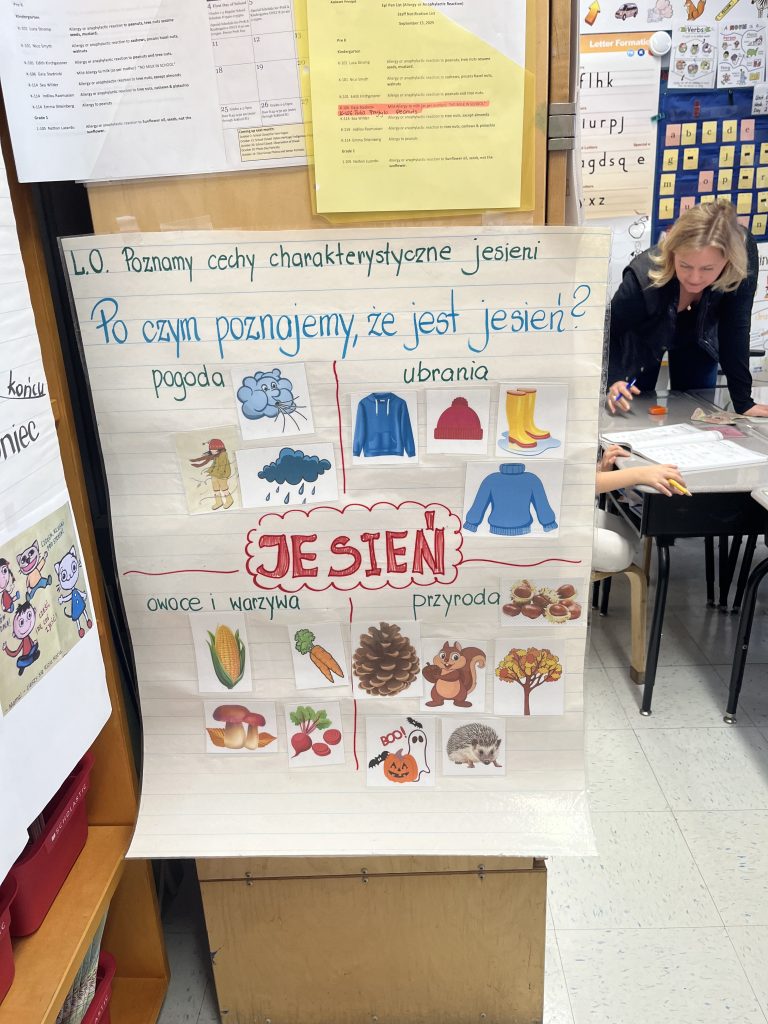
For Beugoms, the principal at PS 34, language is a key to unlocking the community’s Polish heritage. In 2015, under former principal Carmen Asselta, the school launched its Polish-English dual language program. Now in its eleventh year, about a quarter of the student body is enrolled in the program, Beugoms says. Students progress from kindergarten to fifth grade in a mirrored classroom, with everything written in Polish on one side and English on the other. The bilingual teachers in the program guide students through math, science, social studies and literature in both Polish and English, paying special attention to Polish historical figures like Marie Curie and Copernicus. And every student, Beugoms says, Polish or otherwise, knows what a pierogi or a pączki (donut) is.
“It unlocks a door to culture,” he said. “Language might appear to be a barrier from someone accessing a new culture, but when you learn, even in small increments, you start to unlock things.”
Inside PS 34’s Polish-English dual language classrooms, students learn literature, science, math and social studies in both Polish and English, with a special focus on Polish culture.
For some Polish-American parents who’ve lost touch with their heritage, the program provides a new motivation to learn (or re-learn) the language of their family through their children. Beugoms recalls one parent of Polish descent who didn’t grow up speaking Polish. But both of her children are in PS 34’s dual-language program, and for a parent-student read-aloud the school hosted one year, she came ready with a Polish book in-hand.
“The Polish that she heard as a kid from her grandparents was coming back to her,” Beugoms said. “So she came with a book and said ‘don’t judge me.’”
Although the program is mostly made up of Polish heritage students, many of whom speak Polish at home, others aren’t Polish at all. The school holds a celebration for Polish children’s day on June 1st. One year, a non-Polish fifth grade student who’d been in the program since kindergarten, gave a presentation on Copernicus, in near-fluent Polish, to a room full of stunned Polish parents.
And with more Poles returning to Poland than ever, the program has another purpose: preparing Polish students for life in Poland, should they decide to return.
“I’ve had students from this program move to Poland, and then the parents write me an email stating how the school in Warsaw was impressed,” Beugoms said. “There’s a lot of opportunity in Poland nowadays, so it’s attracting a lot of folks back.”
In a 2024 interview with the Governor’s Island-based nonprofit, the Institute for Public Architecture, architect and Bay Ridge native John di Domenico recounted life in his neighborhood before the Brooklyn-Queens Expressway:
“The block was very important to you as a child growing up,” he said, “and when summer came along you played games in the street, you played stoopball, stickball.”
It was the basic unit around which urban life was organized. One could imagine, then, the strife brought by its utter destruction when the BQE came through Bay Ridge in the 1960s.
“I think its biggest effect to a 10 or 11 year old was noting at the end of a school year that some students didn’t return because they had to relocate over the summer,” di Domenico said.
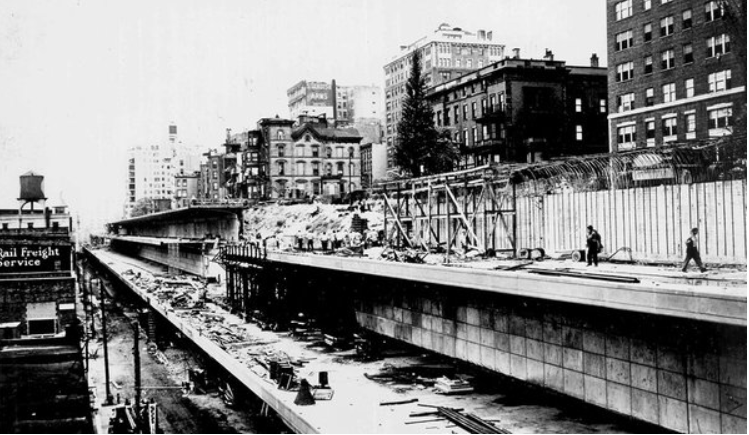
The BQE was the infamous New York City urban planner Robert Moses’ magnum opus, a sprawling, highway designed to cut car travel times between Brooklyn and Downtown Manhattan. Built from 1937 to 1964, there was scarcely a Brooklyn community spared from the BQE, which divided tight-knit neighborhoods and sent communities scattering— a demographic shift the borough has yet to fully recover from.
Now, decades after its visionary’s death, the highway is a noisy, crumbling relic of a bygone era. One particular section, the triple cantilever over Furman Street in the Brooklyn Heights, was at risk of collapsing under heavy traffic loads by as early as 2026, until the City reduced the number of traffic lanes from three to two. The City’s Department of Transportation has plans to spend $4 billion to rebuild it in 2029, although the project has brought up questions about the future of the BQE as a whole.
Part of the larger Interstate-278 route, Moses took charge of constructing the Brooklyn portion of the highway, beginning in Greenpoint in the 1950s. Construction passed through Williamsburg, then populated by mostly working class Eastern European, Italian, and Puerto Rican immigrants, according to architect and urban planner Adam Paul Susaneck in his blog, “Segregation by Design.”
After passing through the historic core of Downtown Brooklyn, the highway — cutting diagonally through the city’s grid-structured neighborhoods — dipped into South Brooklyn, where it severed the Red Hook Houses, then home to working-class Black and Italian-American communities, from the rest of the borough via what Susaneck calls a “massive, traffic-choked and exhaust spewing trench between it the rest of the city.”
All told, Moses’ projects from the 1920s-1960s would displace over 250,000 people. Although Moses promised to relocate displaced families to public housing projects, later studies found that the percentage of families actually relocated was minimal. As the BQE cut its way through Brooklyn, a pattern emerged, later identified by Robert Caro in his Moses biography, “The Power Broker.”
Caro writes: “If the number of persons evicted for public works was eye-opening, so were certain of their characteristics…Remarkably few were white. Although the 1950 census found that only 12 percent of the city’s population was nonwhite, at least 37% of the evictees and probably far more were nonwhite.”
It’s worth noting that Moses, the great champion of the highway, did not, according to Caro, have a driver’s license. Furthermore, he spent much of his time in the city being driven around in a “chauffeured limousine,” functioning as a sort of leathery, upholstered office.
“It was in transportation,” Caro writes, “the area in which RM was most active after the war, that his isolation from reality was most complete: because he never even participated in the activity for which he was creating his highways—driving—at all.”
All of this displacement and destruction for a highway that failed to make travel between Manhattan and Brooklyn quicker. In the modern era, traffic has only worsened, as variables that didn’t exist during Moses’ lifetime have stressed the 20th century structure. E-commerce has brought a surge in heavy delivery trucks and the pandemic led to a bump in car travel in the city. Traffic on the BQE, as New York Times reporter Winnie Hu explains in a 2022 interview, seems to be compounding on itself, making for ever-slower, more frustrating travel:
“There have been complaints about more truck traffic in neighborhoods around the B.Q.E. as trucks and cars have gotten off the highway, looking for alternative routes on local roads when the B.Q.E. was backed up.”
Was it all worth it? di Domenico isn’t so sure.
“All of this was the result of this notion that moving across the city was so important, and that the end justified the means,” di Domenico said. “That it was getting through New York that was really important, even if it meant destroying all these individual neighborhoods along the way.”