An Elegy for Oakland Street

GEOFFREY COBB

Author, “Greenpoint Brooklyn’s Forgotten Past”

gcobb91839@Aol.com

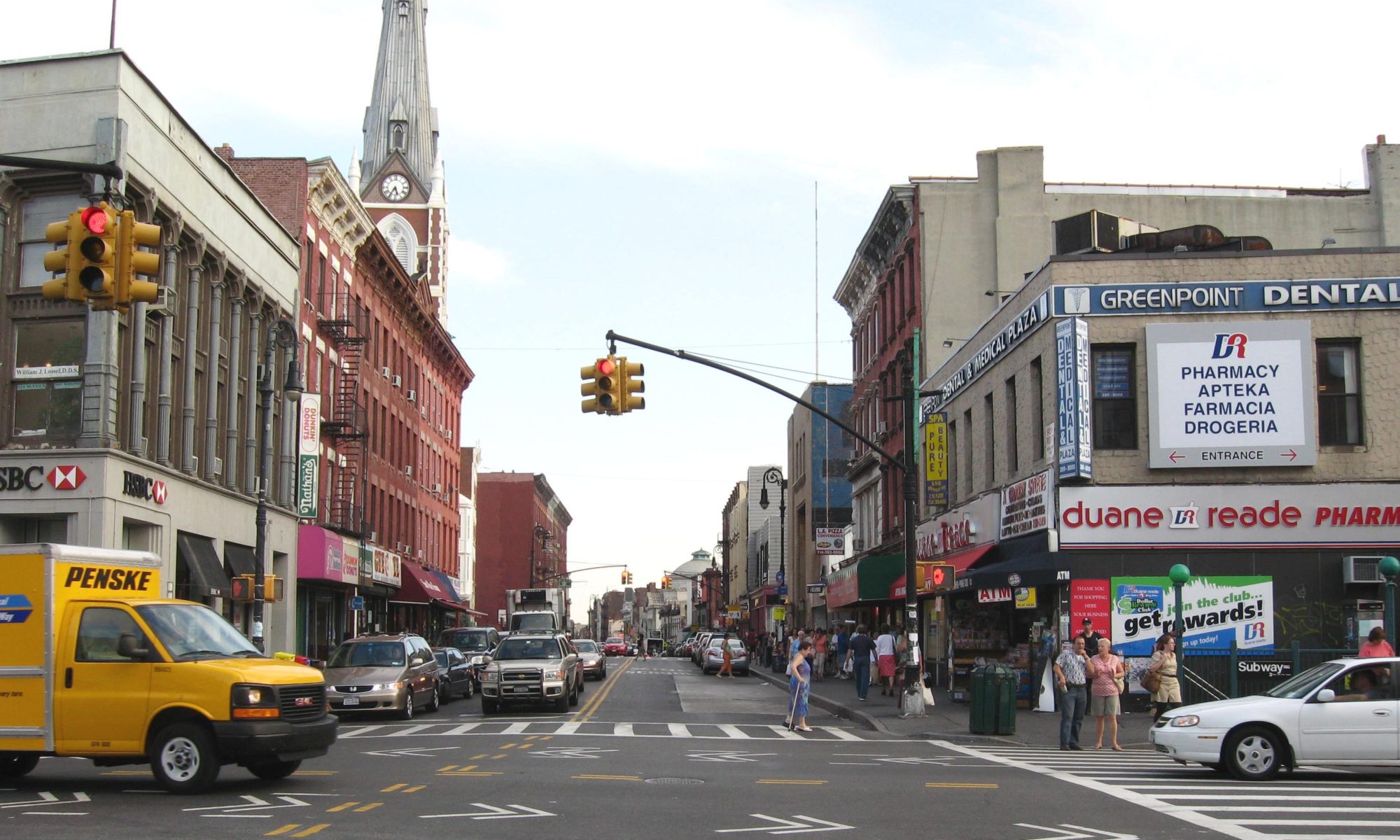
One of the first things that our new Mayor Zohran Mamdani did was to come to Greenpoint and address the controversy surrounding McGuinness Boulevard, the four- lane traffic artery that divides the neighborhood and many local resi- dents. Before we address the present controversy let’s take a look at the history of the boulevard. Once, Mc- Guinness Boulevard was not a four- lane speedway at all/ It was once quaint Oakland Street; a charming cobblestoned street lined by pretty, wood-frame 19th-century homes typical of our historic district.

It is hard to conceive the mindset that wanted to destroy such a lovely street and replace it with a soulless four-lane highway, but in the late 1950s automobiles were seen as the future of transportation and the city was ready to carve up Greenpoint for motorists. Robert Moses, the in- famous power broker, had his sights on our area. Moses, who arguably had the greatest influence on New York’s infrastructure of any person who ever lived, wanted to destroy Oakland Street. The destruction of Oakland Street was only a small piece in the grand scheme of Rob- ert Moses who built the BQE, the Tri-borough Bridge, and the Cross-

Bronx Expressway. Moses wanted a city for motorists and tens of thou- sands of homes across the city fell victim to his projects.

Oakland Street was, sadly, the only north-south street, other than Manhattan Ave. that stretched to Newtown Creek. In the late 1950s the city determined that the rick- ety old Vernon Blvd. Bridge, which Greenpointers called the Manhattan Avenue Bridge, should be replaced. The north end of Oakland Street be- came the logical place to build a new bridge of the creek, and they built the Pulaski Bridge to funnel traffic between the Brooklyn Queens Ex- pressway in Brooklyn and Long Is- land City.

When the new bridge first opened, Oakland Street was widened, but only as far south as Greenpoint Ave- nue – and gas stations to service the heavy car and truck traffic quickly appeared. The narrow section of Oakland Street remaining beyond Greenpoint Avenue survived, but created traffic jams, dooming the quaint cobblestone street and its pretty houses.

All of the houses on the east side of Oakland Street and all the houses from Driggs Ave to the BQE were condemned by the City to create the new grand boulevard. Some residents tried to fight and save their homes, but their utilities were cut off, and they grudgingly accepted com- pensation for their beloved homes. Amazingly though, most people did not protest. They regarded losing their homes and the cobblestoned street as the price to pay for progress. The only defiance by the community was a proposal for more gas stations on the boulevard south of Meserole Av- enue. The commu- nity killed the idea and that is the only reason new hous- ing was built on the thoroughfare at all.

In 1964, Sal- vatore Tortorici pressed his local alderman, Joe Shar- key to rename the new boulevard in honor of the great- est politician in lo- cal history: Peter J. McGuiness, who had passed away in 1948. The City Council passed the name change unani- mously and Oak- land Street was re- named McGuinness Boulevard.

Many local residents have complained about the way motorists drive along the boulevard. The four wide lanes encouraged aggressive driving, illegal passing, and excessive speeding—conditions that routinely lead to serious motor vehicle collisions. Hundreds of pedestrians have been hit on McGuinness Boulevard, with over 200 fatalities since 1956, including 11 pedestrians or cyclists killed between 1995 and 2021.

Activists in the community pushed for the transformation of McGuinness into a two-lane, pedestrian friendly artery with bike lanes. Wealthy production company own- ers Gina and Tony Argento funded a movement to block the changes to the boulevard. After the redesign began in 2023, the Adams admin- istration abruptly switched course, throwing its support behind a re- vised plan for the northern section of the road that critics called wa- tered down and insufficient.

In August, the Manhattan district attorney charged Ingrid Lewis-Mar- tin, a top aide to Mr. Adams, with conspiring to kill the original pro- posal, in exchange for a relatively small sum of money and a speaking role on a television series owned by the Argento siblings. Ms. Lewis-Martin pleaded not guilty, as did the production company’s owners, Gina and Anthony Argento, who were also charged.

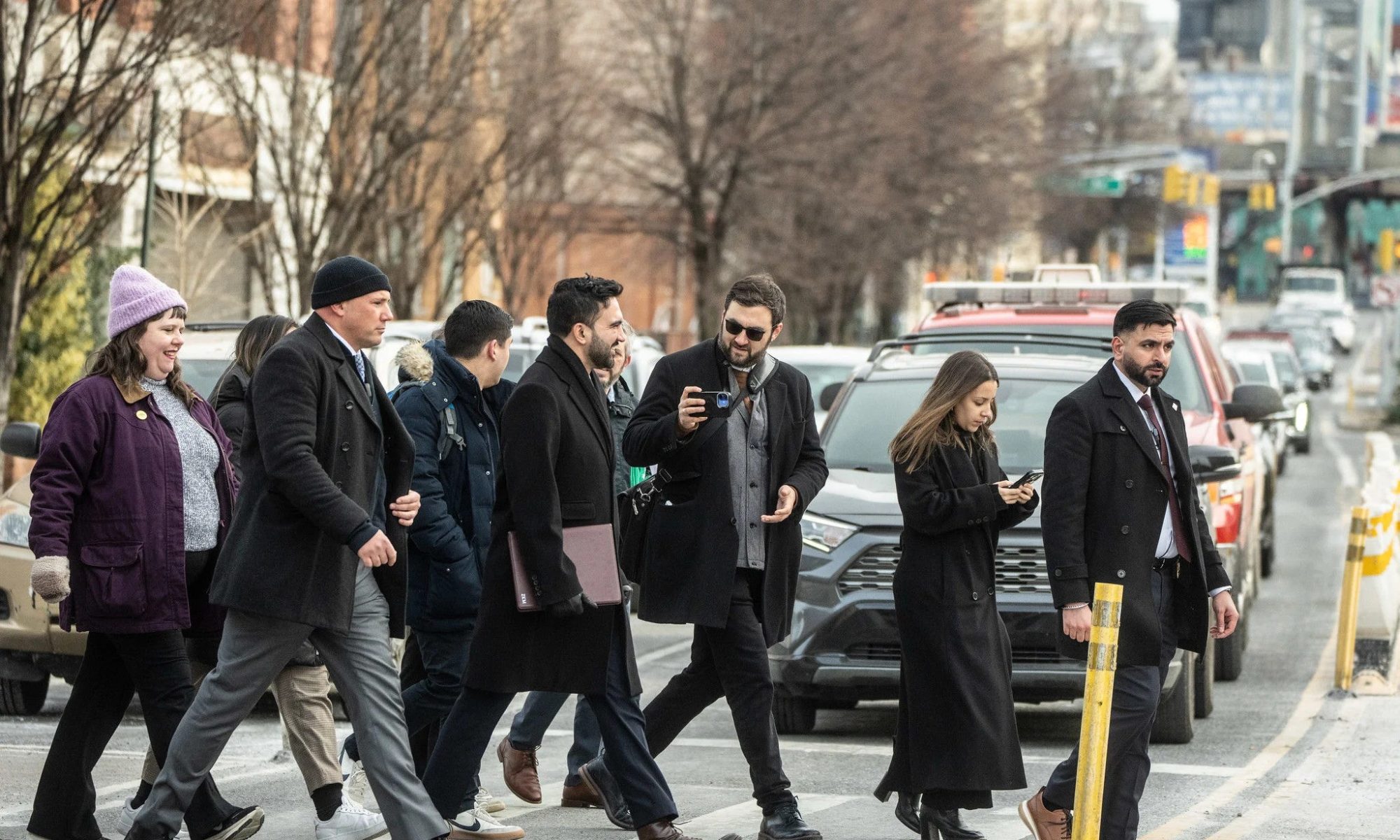
Last week, Mayor Mamdani, surrounded by supporters with signs bearing the names of crash victims on the boulevard, said he would finish the original, full plan for the roadway as soon as weather permit- ted, and that he would not be “bowed by big-money interests.” “Thanks to so many who went out and pounded the pavement, that pavement now will change,” he said. Some residents fear that the changes to the boulevard will lead to increased auto traffic on the streets running parallel to the boulevard. One thing though is certain, the boulevard will soon change into a narrower, more pedes- trian and cyclist friendly artery.
G Train Fleet Gets Younger and Older, Simultaneously

By JACK DELANEY | jdelaney@queensledger.com

The gods of transportation taketh, but they giveth too.

Last December, the MTA was facing a strange problem: the wheels of one model of subway car, R160s, were wearing out over the course of a few weeks, rather than months, and had to be rapidly replaced.

These R160 cars run on the E, F, and R lines, so theoretically the G should have been unaffected. But when the defective cars were pulled from service, substitutes from the G took their place — and vintage models from the 1980s were dusted off to fill any vacancies. Those cars, R68s, are slated to be phased out this year (prompting passengers to preemptively eulogize their unique yellow-and-orange “lover’s seats,” which are arranged in a cramped L-shape.) The end result, at least for the moment, is that G riders have been left with mostly musty, outmoded trains. 

Yet efforts to modernize the G line, the sole subway that doesn’t enter Manhattan, are also underway. After a “summer of pain” — not the citywide transit Tartarus of 2017, but the G-specific woes of 2024, when the line was shut down for repairs — the route started up again in September with a new signal system installed, which will come online in 2027. 

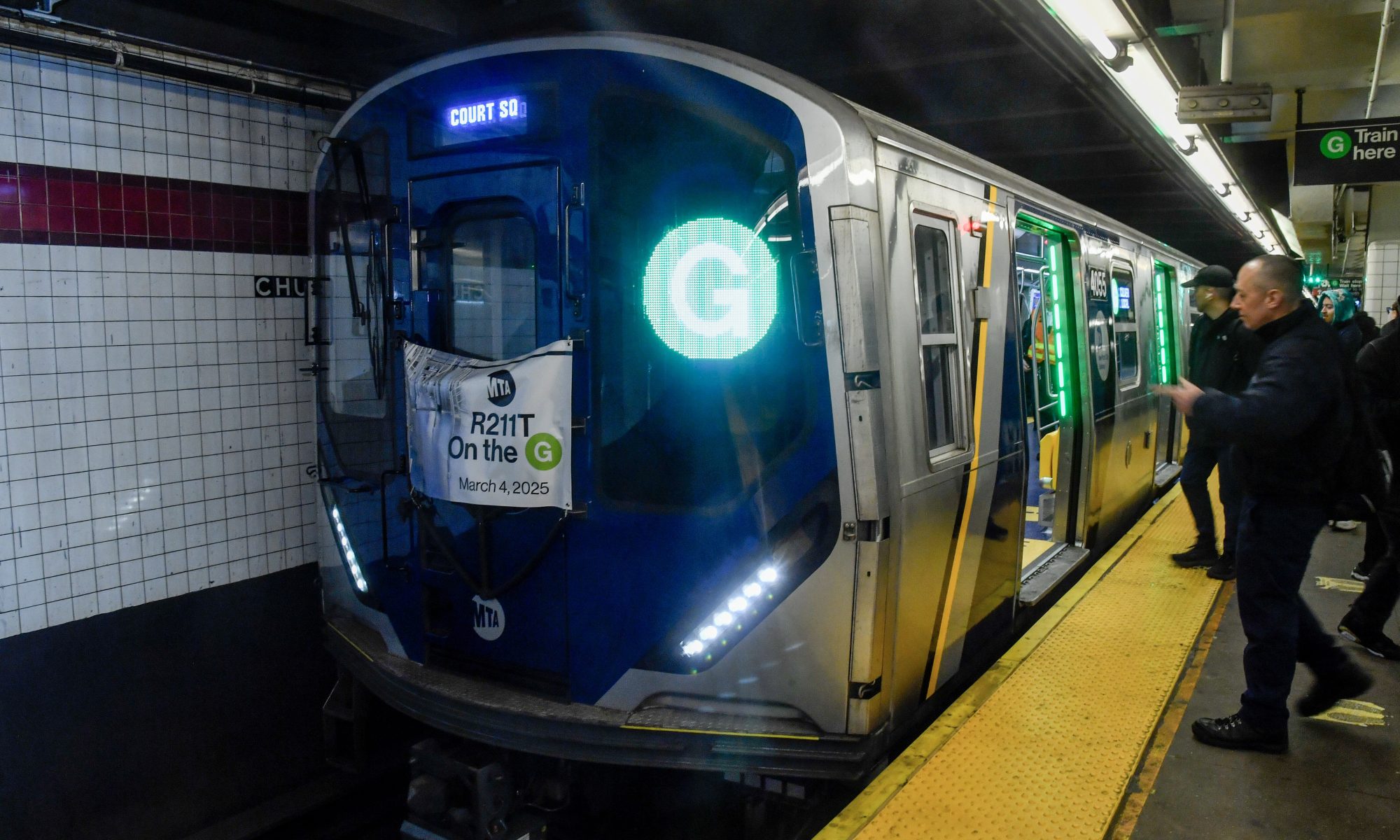
A more palpable change has been the introduction this month of open gangway trains, R211Ts, to the G line. The MTA initially rolled out two R211Ts, which have no doors between cars, on the C line, before announcing that it would be repurposing half of those 20 cars for the shorter G, where the 10 compartments could, like mitosis, form two additional trains with 5 apiece.

The transit authority is bullish on the revamped models: last year it approved a plan to buy 80 more open gangway R211Ts, ostensibly funded by congestion pricing. And at a press conference on March 4, Brooklyn lawmakers were similarly ebullient, praising the rollout.

Assembly Member Jo Anne Simon called the open gangway trains “more comfortable;” state Senator Andrew Gounardes and AM Emily Gallagher both argued they would relieve crowding, while making it more accessible for riders using wheelchairs or strollers. Council Member Lincoln Restler simply said the update was “awesome.”

New York isn’t the first transit system to adopt the open gangway. From Paris to Delhi, “cities around the world have benefitted from this same design,” said Gounardes. In fact, until now it’s been a glaring gap between America and its peers — 6sqft writes that “75 percent of non-U.S. metros have adopted open gangway trains, whereas zero percent of U.S. metros have.”

But many Brooklynites are split on the design, largely over public safety concerns. Online, the chatter has fallen into two broad buckets: the people who think the open gangway is indeed safer, because you can move away from someone who’s bothering you more easily, and those who maintain it’s the opposite, since you can’t switch cars. Anecdotally, the divide seems gendered, with men largely feeling safer on the R211Ts and women expressing reservations. 

Sophie, from Windsor Terrace, fell into the latter camp — she had the sense that the long corridor would make it harder to escape, and she also worried that the trains were becoming too “screen-oriented,” with little to gain practically. “They play TikToks and moving ads on the new trains,” she said. “I don’t think we need that.”

That aside, she acknowledged that the trains have been in dire need of improvements, and that the system has lagged behind international analogs. If the open gangway moves the needle on repairs, she noted, that would be a win. 

A fresh wave of open gangway trains are on their way, so they may eventually become the norm in New York City rather than a shiny toy. But for the time being, commuters on the G line roll the dice each day — will I ride a holdover from the 80s, or the digitalized train of the future?

As BQE Deteriorates, Officials at Odds Over Fix

The triple cantilever was built in the 1940s, and experts say it is in dire need of repairs. Photo: Jack Delaney

By JACK DELANEY | jdelaney@queensledger.com

“No more kicking the can,” said Mayor Eric Adams in 2023, as he announced two initiatives to fix the BQE Triple Cantilever, a distressed stretch of highway that runs underneath the Promenade in Brooklyn Heights.

Yet in a letter sent to Deputy Mayor Meera Joshi last Monday, five elected officials whose districts encompass the site are alleging that Adams has been doing just that: punting the issue.

At the heart of the matter is the question of whether to act sooner to repair the cantilever in a limited capacity, or to wait until a long-term solution — likely a complete redesign — can be implemented.

Endorsing the latter approach, the mayor’s office and Department of Transportation officials have argued that a short-term remedy would expend the political capital necessary for a lasting overhaul, stalling the project indefinitely.

But the recent letter, signed by Councilmember Lincoln Restler, Assemblymember Jo Anne Simon, Senator Andrew Gounardes, and Congress Members Dan Goldman and Nydia Velazquez, argues that the process of determining a permanent fix has already stretched on too long, and a stopgap measure is badly needed to ensure the highway is safe.

“Considering the importance of federal funding for this project and the orientation of the incoming Trump administration toward New York City and the general uncertainty at City Hall,” Restler wrote in an email, “it is not clear that the Adams administration’s plans remain viable.”

“We need an alternative option that protects and preserves the safety of the highway and our community for the foreseeable future, while we work to craft longer term solutions for the whole BQE corridor,” he said. “Implementation of a stabilization plan to extend the lifespan of the Triple Cantilever would create time for city, state and federal governments to achieve new strategies to divert freight and reduce trucks and cars on this highway.”

The cantilever was constructed in the 1940s, and renovations were floated in 2006 during a planning workshop organized by state officials. In 2018, Mayor Bill De Blasio’s team pitched a temporary six-lane highway that would have run parallel to the Promenade, which would have been closed for up to six years. Needless to say, Brooklyn Heights residents weren’t pleased, and the proposal withered.

Mayor Adams has picked up where De Blasio left off, but has encountered roadblocks of his own: per amNewYork, in January the Biden administration rejected a request for $800 million to redo the cantilever. The deliberations over the correct design have plodded on regardless, with DOT holding forums to gather community input, the most recent of which occurred last week.

At this month’s Brooklyn Community Board 2 full board meeting, some members who had attended the latest info sessions were just as leery as Restler of DOT’s promises for a long-term solution.

“You heard the councilman mention the BQE — we learned last night that they’re starting the clock again on the two-year study to come up with a plan,” said Sidney Meyer, chairperson of CB2’s Transportation & Public Safety Committee. “Now, most of us have been involved with the same two-year plan, beginning in the year 2000. It’s the same two years, where they’ll study all the alternatives, at the end of which they’ll propose whatever they’re going to propose. I would urge you to be vigilant about what’s going to happen there.”

In 2020, a report by leading transportation experts concluded that the BQE was deteriorating faster than expected, in part due to the presence of overweight trucks. The triple cantilever was especially degraded, it noted, and needed repairs “immediately.”

While the report warned that sections of the road could become “unsafe and unable to carry existing levels of traffic within five years,” it also specifically rejected any proposals for a temporary highway near the Promenade, instead endorsing a refurbished four-lane structure.

Ultimately, almost all the stakeholders involved seem to agree that a major overhaul is needed, and soon. Why then, many residents like Meyer ask, has it taken more than 20 years to arrive at yet another impasse?

The fault for continual setbacks to the BQE project may not belong to DOT and Gracie Mansion alone. As Christopher Bonanos, New York Magazine’s city editor, wrote in June, “digging up half of Brooklyn for the once-in-a-century chance to finally fix the BQE and, in turn, build a better city, would require a level of misery tolerance that has come to seem unimaginable.” He noted that the best choice could be to demolish parts of the BQE and bury others, but the inconvenience to drivers and locals — and what he viewed as an overly cautious attitude on the city’s part — has made it politically infeasible.

As of now, the environmental review is slated to begin in 2025, and bona fide construction on the cantilever would start in 2029 at the earliest.