GEOFFREY COBB
Author, “Greenpoint Brooklyn’s Forgotten Past”
gcobb91839@Aol.com
One of the first things that our new Mayor Zohran Mamdani did was to come to Greenpoint and address the controversy surrounding McGuinness Boulevard, the four- lane traffic artery that divides the neighborhood and many local resi- dents. Before we address the present controversy let’s take a look at the history of the boulevard. Once, Mc- Guinness Boulevard was not a four- lane speedway at all/ It was once quaint Oakland Street; a charming cobblestoned street lined by pretty, wood-frame 19th-century homes typical of our historic district.
It is hard to conceive the mindset that wanted to destroy such a lovely street and replace it with a soulless four-lane highway, but in the late 1950s automobiles were seen as the future of transportation and the city was ready to carve up Greenpoint for motorists. Robert Moses, the in- famous power broker, had his sights on our area. Moses, who arguably had the greatest influence on New York’s infrastructure of any person who ever lived, wanted to destroy Oakland Street. The destruction of Oakland Street was only a small piece in the grand scheme of Rob- ert Moses who built the BQE, the Tri-borough Bridge, and the Cross-
Bronx Expressway. Moses wanted a city for motorists and tens of thou- sands of homes across the city fell victim to his projects.
Oakland Street was, sadly, the only north-south street, other than Manhattan Ave. that stretched to Newtown Creek. In the late 1950s the city determined that the rick- ety old Vernon Blvd. Bridge, which Greenpointers called the Manhattan Avenue Bridge, should be replaced. The north end of Oakland Street be- came the logical place to build a new bridge of the creek, and they built the Pulaski Bridge to funnel traffic between the Brooklyn Queens Ex- pressway in Brooklyn and Long Is- land City.
When the new bridge first opened, Oakland Street was widened, but only as far south as Greenpoint Ave- nue – and gas stations to service the heavy car and truck traffic quickly appeared. The narrow section of Oakland Street remaining beyond Greenpoint Avenue survived, but created traffic jams, dooming the quaint cobblestone street and its pretty houses.
All of the houses on the east side of Oakland Street and all the houses from Driggs Ave to the BQE were condemned by the City to create the new grand boulevard. Some residents tried to fight and save their homes, but their utilities were cut off, and they grudgingly accepted com- pensation for their beloved homes. Amazingly though, most people did not protest. They regarded losing their homes and the cobblestoned street as the price to pay for progress. The only defiance by the community was a proposal for more gas stations on the boulevard south of Meserole Av- enue. The commu- nity killed the idea and that is the only reason new hous- ing was built on the thoroughfare at all.
In 1964, Sal- vatore Tortorici pressed his local alderman, Joe Shar- key to rename the new boulevard in honor of the great- est politician in lo- cal history: Peter J. McGuiness, who had passed away in 1948. The City Council passed the name change unani- mously and Oak- land Street was re- named McGuinness Boulevard.
Many local residents have complained about the way motorists drive along the boulevard. The four wide lanes encouraged aggressive driving, illegal passing, and excessive speeding—conditions that routinely lead to serious motor vehicle collisions. Hundreds of pedestrians have been hit on McGuinness Boulevard, with over 200 fatalities since 1956, including 11 pedestrians or cyclists killed between 1995 and 2021.
Activists in the community pushed for the transformation of McGuinness into a two-lane, pedestrian friendly artery with bike lanes. Wealthy production company own- ers Gina and Tony Argento funded a movement to block the changes to the boulevard. After the redesign began in 2023, the Adams admin- istration abruptly switched course, throwing its support behind a re- vised plan for the northern section of the road that critics called wa- tered down and insufficient.
In August, the Manhattan district attorney charged Ingrid Lewis-Mar- tin, a top aide to Mr. Adams, with conspiring to kill the original pro- posal, in exchange for a relatively small sum of money and a speaking role on a television series owned by the Argento siblings. Ms. Lewis-Martin pleaded not guilty, as did the production company’s owners, Gina and Anthony Argento, who were also charged.
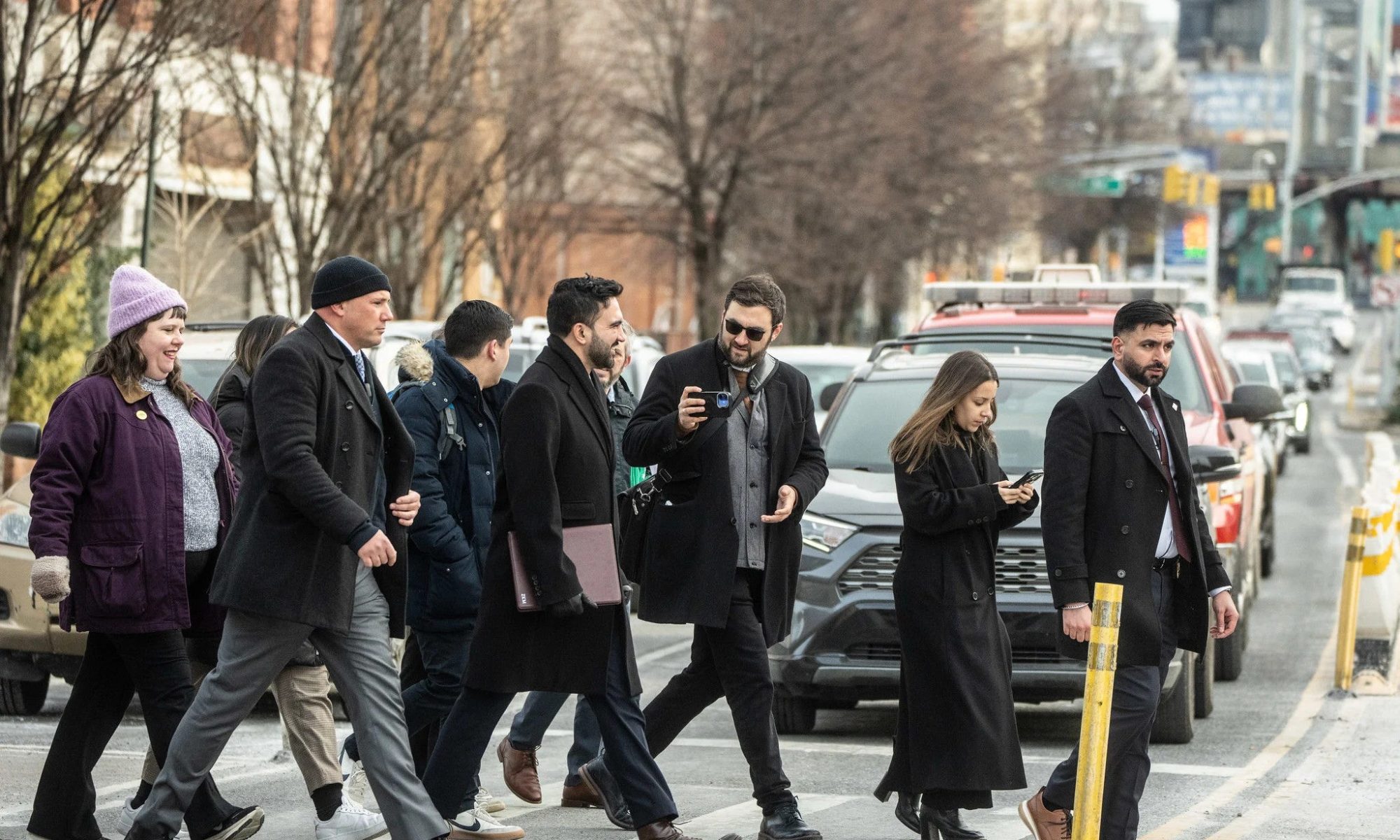
Last week, Mayor Mamdani, surrounded by supporters with signs bearing the names of crash victims on the boulevard, said he would finish the original, full plan for the roadway as soon as weather permit- ted, and that he would not be “bowed by big-money interests.” “Thanks to so many who went out and pounded the pavement, that pavement now will change,” he said. Some residents fear that the changes to the boulevard will lead to increased auto traffic on the streets running parallel to the boulevard. One thing though is certain, the boulevard will soon change into a narrower, more pedes- trian and cyclist friendly artery.